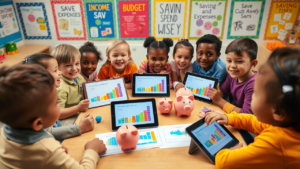


Do you want your child to understand how banks and digital money work? In today’s world, most payments happen with phones or cards. So it’s important to teach kids not just about coins and cash, but also about banks and online money.
In this simple guide, we’ll explain:
-
What a bank is and how it helps
-
How savings accounts work
-
What is digital money (like debit cards and UPI)
-
Basic safety tips for online payments
What Is a Bank?
A bank is a safe place where people keep their money.
🧒 Real-World Example:
Riya gets ₹200 as a birthday gift from her grandparents. Her parents take her to the bank and open a kids’ savings account. Now her money is safe and growing slowly with interest.
You can explain to your child:
-
People deposit money (put money in) in a bank for safety
-
The bank keeps the money secure
-
People can withdraw money (take it out) when needed
-
Banks also give loans and help people save and grow their money
How Savings Accounts Work
A savings account is a special account in the bank where people save money and earn a small amount of interest on it.
🧒 Real-World Example:
Aarav deposits ₹100 every month in his savings account. After a year, he has ₹1,200 plus some extra money added by the bank as interest. He uses this money to buy a new cricket kit.
Here’s how it works:
-
You deposit money into the account
-
The bank adds interest (extra money) every few months
-
You can check your balance using an ATM card, bank app, or passbook
Let your child see the passbook and understand how money grows over time.
What Is Digital Money?
Today, most people use digital money. This means money is transferred using phones, apps, or cards without using real notes or coins.
Common Types of Digital Money:
-
Debit Cards – A card used to pay from your bank account
-
UPI (Unified Payments Interface) – Used with apps like Google Pay, PhonePe, or Paytm
-
Mobile Wallets – Apps where you can keep and spend money online
How Digital Money Works
🧒 Real-World Example:
Meena’s mom orders groceries online. She pays using Google Pay. The money goes from her bank account directly to the store’s account. No cash is used, and the delivery is done at home.
You can say: “Just like video games use coins inside the game, in real life, people now use mobile apps to pay.”
Digital Safety Tips for Kids
Kids should know that digital money is helpful only when used safely.
🔐 Real-World Example:
Rahul accidentally shares the OTP he receives on his dad’s phone with a stranger. The next day, money is gone from the bank account. This teaches him and others to never share passwords or OTPs.
Digital Money Safety Tips:
-
Never share your PIN or OTP
-
Use strong passwords for bank apps
-
Avoid public Wi-Fi for banking
-
Do not click on strange links
-
Check payment amount before tapping ‘Send’
Make it clear: “Your PIN is like your house key—never give it to strangers!”
Real-Life Learning Ideas
-
Visit a real bank with your child and explain how deposits and withdrawals happen.
-
Let them watch you scan a QR code to pay for vegetables or groceries.
-
Involve them in mobile recharges, bill payments, or online shopping.
-
Play games like Monopoly, The Game of Life, or simple money role-play at home (like setting up a toy shop).
Final Thoughts
Understanding how banks work and what digital money is will help your child feel more confident in today’s world. These lessons will also keep them safe and responsible when they start managing money on their own.
👉 Start early, keep it fun, and use real-life examples they can see and understand.