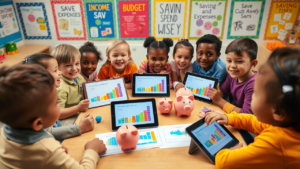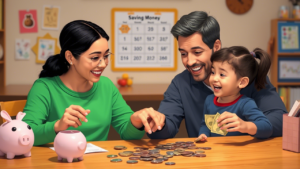


Learning about money doesn’t have to be boring! In fact, the best way to teach children about finance is through fun, games, stories, and role play. When kids enjoy the process, they remember the lessons for life.
In this article, we’ll explore exciting finance games, real-life role play ideas, and how you can use storytelling to make financial education fun and engaging.
🎮 1. Games & Simulations
Games are a great way to teach kids how to make decisions with money, understand saving, and practice budgeting—without real risk.
🧩 Money Board Games (Offline)
- Monopoly Junior: Teaches buying, selling, and simple investment ideas.
- The Allowance Game: Helps kids understand earning, saving, and spending.
- Cashflow for Kids: Designed by Robert Kiyosaki to teach income, assets, and money habits.
💻 Online Money Games
- Peter Pig’s Money Counter (Ages 5–8): Teaches coin recognition and saving.
- Bankaroo: A virtual bank for kids to learn saving, spending, and goal-setting.
- Pretend & Play ATM Machine: A toy ATM where kids can simulate deposits, withdrawals, and balances.
🧒 Real-World Example:
Neha, age 10, started using a play ATM toy at home. She and her brother acted like bank customers and learned how to “withdraw” from savings. Now, she understands how real ATMs work and always asks, “Is this from savings or spending money?”
📖 2. Storytelling & Money Lessons
Stories can make money concepts memorable. You can create or use short, simple tales to teach key financial principles.
✨ Ideas for Money Stories:
- The Tale of Two Squirrels: One saves nuts for winter, one spends them all. Guess who’s ready when the snow falls?
- Raju and the Magic Jar: Raju learns to divide his coins into Save, Spend, and Share jars. He buys a toy, saves for a bike, and donates to help a friend.
- Maya’s Lemonade Dream: Maya wants a bicycle. Her mom teaches her how to earn money with a lemonade stand, set goals, and save each week.
🔁 What You Can Do:
- Create bedtime stories with money values.
- Ask your child to finish a story: “What should Maya do with her extra ₹100?”
🧒 Real-World Example:
Kartik’s dad told him a bedtime story about a dragon who saved golden coins instead of wasting them. Kartik was so inspired, he started saving ₹10 from his pocket money every week!
🎭 3. Role Play: Learn by Pretending
Role play helps kids practice real-life money scenarios in a safe and playful way.
🏦 Bank & Shop Role Play
- Play Bank: One child is the banker, others are customers. Use fake money and savings books.
- Mini Store: Set up a pretend shop with toys or snacks. Give kids a small budget and ask them to “shop smart.”
💬 Role Ideas:
- Customer buying groceries
- Banker helping open a savings account
- Toy shop owner giving discounts
- Budget meeting at home (yes, kids can join!)
🧒 Real-World Example:
Twins Aarav and Arya set up a toy shop at home. Their parents gave them ₹100 in fake money. They priced their toys, gave each other “discounts,” and learned to give back correct change.
✨ Bonus: Combine All 3!
Want to level up the learning?
Start with a story, turn it into a game, and finish with a role play.
Example:
Story – Maya sells lemonade
Game – Play a lemonade stand game (online or homemade)
Role Play – Pretend to run a lemonade shop with prices, customers, and change
🧠 Final Thoughts
Kids learn best when they play, imagine, and explore. By turning money lessons into games, stories, and role play, you’re building a strong financial foundation that lasts a lifetime.
Remember: financial education isn’t about teaching complex terms. It’s about helping children make smart decisions, understand value, and feel confident handling money.