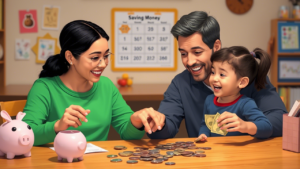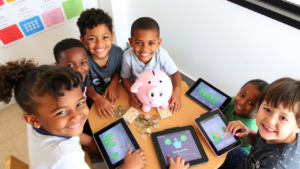


Want to teach your child how to manage money? Learning how to save and budget at a young age helps kids become smart and responsible adults. In this article, we’ll explain how to teach kids about saving and budgeting, using easy examples and fun methods. This is perfect for children aged 10–17.
Why Saving Money Is Important for Kids
Saving is the first step to financial success. When kids learn to save money, they understand the value of patience and planning.
Short-Term vs Long-Term Saving Goals
Help your child set two types of savings goals:
-
Short-Term Goals – Saving for a toy, game, or birthday gift
-
Long-Term Goals – Saving for a bicycle, tablet, or a school trip
Explain that it’s okay to spend some money, but saving helps them buy bigger things in the future.
Piggy Bank vs Bank Account
Kids can start saving using:
-
A piggy bank or a jar at home – Easy to use, helps them see money grow
-
A children’s savings account – Teaches how real banks work and how to deposit money
Let them use both! Start with a piggy bank, then introduce a real bank account once they are comfortable.
Budgeting Basics for Kids
Budgeting means making a plan for how to use money wisely. It helps kids understand how much money they have, how much they can spend, and how much they should save.
Income vs Expenses
Income = Money they receive (from allowance, gifts, or small chores)
Expenses = Money they spend (on snacks, toys, games, etc.)
You can help them keep a notebook to track:
-
Weekly income
-
Money saved
-
Money spent
Easy Budget Rule: Save / Spend / Share
A simple budgeting method for kids is the 50/30/20 Rule, changed to suit them as:
-
50% Save – For future goals
-
30% Spend – For fun and small things now
-
20% Share – For charity or helping others
You can label three jars or envelopes: Save, Spend, and Share. It’s fun and visual!
Setting Financial Goals
Goal setting is a powerful way to keep kids motivated to save
Small Financial Goals
Help your child choose something they want to buy, like:
-
A toy
-
A birthday gift for a friend
-
A new book or art set
Write it down, add a picture, and calculate how much they need to save.
Tracking Progress
Use a savings tracker (printed or drawn on paper) to mark how much money has been saved each week. Celebrate small milestones to keep them excited!
Make It Fun!
Here are fun ways to teach saving and budgeting:
-
Play games like Monopoly or Money Match
-
Use apps or printable worksheets
-
Give rewards when goals are reached
-
Let them handle money in real-life situations (like paying at a store)
Teaching your child about saving and budgeting is one of the best life lessons you can give. Start small, be consistent, and let them learn by doing. Over time, they will build strong money habits that will help them for life.