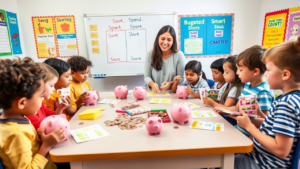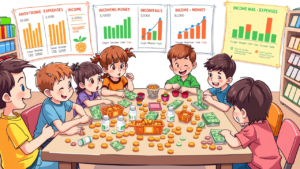


Teaching your child how to spend money wisely and track income and expenses is one of the best life skills you can give them. In this simple guide, we’ll cover smart buying decisions, how sales and offers work, and the basics of income and expenses—explained in a fun and easy way.
Smart Spending for Kids
Making Smart Buying Decisions
It’s important for kids to learn that money is limited. Teaching them how to make smart buying choices will help them in everyday life.
Real-World Example:
Tina wants to buy a school bag. She sees one for ₹800 and another for ₹600 with better quality. Her mom helps her compare prices and read the product label. Tina chooses the ₹600 one—cheaper and better!
Tips to Teach Smart Spending:
-
Compare prices before buying anything
-
Read labels to know what you are buying (brand, size, quantity)
-
Understand that expensive doesn’t always mean better
-
Ask: “Do I really need this or just want it?”
Discounts, Offers, and Sales
Kids often get excited seeing words like “50% OFF” or “Buy 1 Get 1 Free.” But not everything on sale is a good deal.
How Discounts Work:
-
Stores give discounts to attract customers
-
Sometimes, original prices are increased before offering a “sale”
Real-World Example:
Ravi sees a toy car during a festival sale. It says “25% off”, but after checking online, he finds the same toy at a lower price without any offer! He learns not to trust offers blindly.
Avoid Impulse Purchases:
-
Impulse purchase means buying something without thinking
-
Teach your child to wait for a day before buying
-
Make a wishlist and revisit it after a few days
💡 Tip: Before buying, ask your child – “Do you need it? Will you use it often?”
Understanding Income and Expenses
💼 Types of Income
Income is the money we earn. Teach kids that people work or invest to earn money.
Two Main Types of Income:
-
Active Income – You earn this by doing work or a job
🔹 Example: Getting pocket money for helping with chores or selling lemonade -
Passive Income – Money you earn without active work every time
🔹 Example: Interest from a savings account or selling handmade crafts online
🧒 Real-World Example:
Aryan makes friendship bands and sells them at school events. He makes ₹200. This is his active income. He also earns ₹10 interest on his savings account – that’s passive income!
Tracking Expenses
Kids should learn where their money goes. This helps them budget and avoid overspending.
Teach Kids to Track Their Spending:
-
Maintain a simple log in a notebook or app
-
Write down daily or weekly expenses
-
Review how much they spend, save, and share
🧒 Real-World Example:
Sana gets ₹500 monthly. She spends ₹200 on snacks, ₹100 on gifts, and saves ₹200. She checks her expense log at the end of the month and sees she can reduce snack spending next time.
Weekly or Monthly Reviews
Once a week or month, sit down with your child and:
-
Check how much they earned and spent
-
Talk about what they did well and what they can improve
-
Set a small savings or spending goal for the next month
This builds money discipline and encourages smart habits.
Learning about smart spending and income vs. expenses at an early age helps children grow into responsible and confident adults. Make it a fun family activity. Let them make mistakes and learn from them—just like grown-ups do.
💬 Encourage this question often: “Is this a smart way to use my money?”