

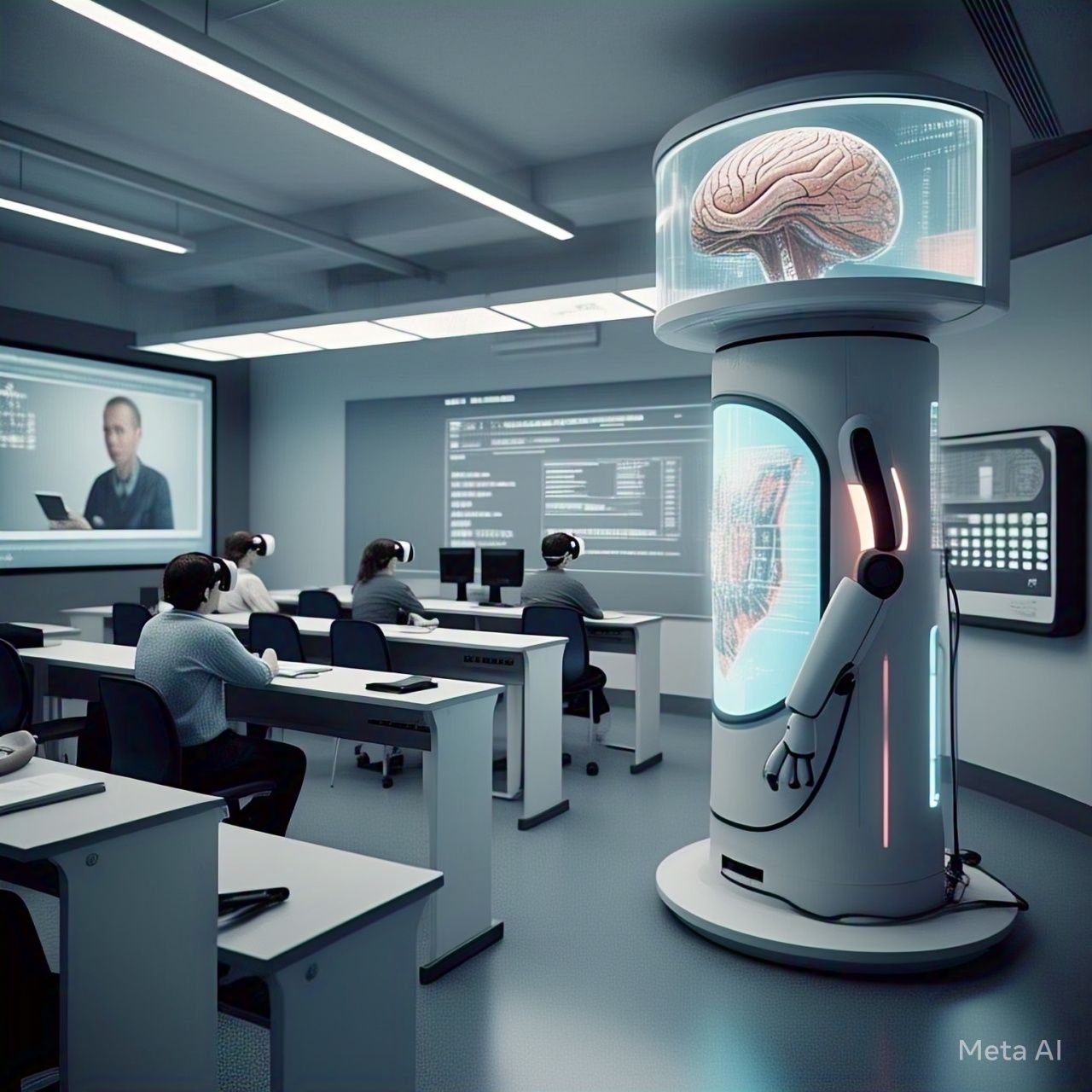
Artificial Intelligence (AI) is revolutionizing various industries, and the education sector is no exception. With rapid advancements, AI is set to transform the way children, students, and professionals learn. From personalized learning experiences to automated administrative tasks, AI will play a crucial role in shaping the future of education. In this article, we explore how AI will change education in the coming years, its impact on students and teachers, and the benefits and challenges it brings.
How AI Will Change Education in the Future
1. Personalized Learning
One of the biggest advantages of AI in education is personalized learning. AI-powered systems can analyze students’ learning patterns, strengths, and weaknesses to create customized lesson plans. This means that each student can learn at their own pace, focusing on areas where they need improvement. Platforms like Duolingo and Khan Academy are already using AI to provide personalized learning experiences.
2. Intelligent Tutoring Systems
AI-driven tutoring systems can act as virtual teachers, helping students understand complex concepts outside the classroom. These systems provide instant feedback, allowing students to learn more effectively. Chatbots and AI assistants can answer questions, guide students through problems, and provide explanations just like a human tutor.
3. Automated Administrative Tasks
AI will significantly reduce the workload for teachers by automating administrative tasks such as grading, attendance tracking, and scheduling. This will allow educators to focus more on teaching and mentoring students rather than spending hours on paperwork.
4. Smart Classrooms and AI-Powered Learning Tools
AI-powered smart classrooms will enhance the traditional learning experience. Tools like virtual reality (VR) and augmented reality (AR) will provide interactive and immersive learning environments. AI can also analyze students’ engagement levels and suggest improvements to teaching methods.
5. AI in Special Education
AI will make education more accessible for students with disabilities. Speech recognition, text-to-speech, and other assistive technologies powered by AI will help students with visual, hearing, or learning disabilities to understand lessons more effectively. AI-based tools can also provide personalized support, ensuring that every student gets equal learning opportunities.
6. Predictive Analytics for Better Learning Outcomes
AI can analyze students’ academic performance and predict future outcomes. This allows educators to identify struggling students early and provide them with additional support before they fall behind. Schools and universities can use AI-powered data analytics to improve their curriculum and teaching strategies.
7. AI-Powered Language Learning
Language learning apps are increasingly using AI to provide real-time feedback and pronunciation correction. AI-driven translation tools help students learn new languages faster and communicate effectively in different languages.
8. AI in Higher Education and Research
In universities, AI is helping researchers analyze large amounts of data, automate experiments, and generate insights faster than ever before. AI-driven research tools can assist students in writing research papers, summarizing articles, and even generating citations.
Impact of AI on Teachers and Students
Positive Impacts
- Improved Learning Experience: AI provides a more engaging and interactive learning environment.
- Time-Saving for Teachers: Automating grading and other tasks allows teachers to focus more on student development.
- Enhanced Accessibility: AI tools make education more inclusive for students with disabilities.
- Better Student Engagement: Gamification and AI-powered adaptive learning make studying more fun and effective.
- Global Reach: Online AI-driven education platforms allow students from remote areas to access quality education.
Challenges and Concerns
- Data Privacy Issues: AI collects large amounts of student data, which raises concerns about security and privacy.
- Job Security for Teachers: While AI can assist teachers, some fear it may replace certain educational roles.
- Dependence on Technology: Over-reliance on AI might reduce critical thinking and problem-solving skills in students.
- High Implementation Costs: Integrating AI into schools and universities requires significant investment.
The future of AI in education looks promising, with numerous benefits for students, teachers, and educational institutions. AI will create a more personalized, efficient, and inclusive learning experience for all. However, it is essential to address challenges such as data security, job displacement, and accessibility to ensure AI benefits everyone equally. With proper implementation and ethical use, AI has the potential to revolutionize education and make learning more effective and enjoyable for future generations.